
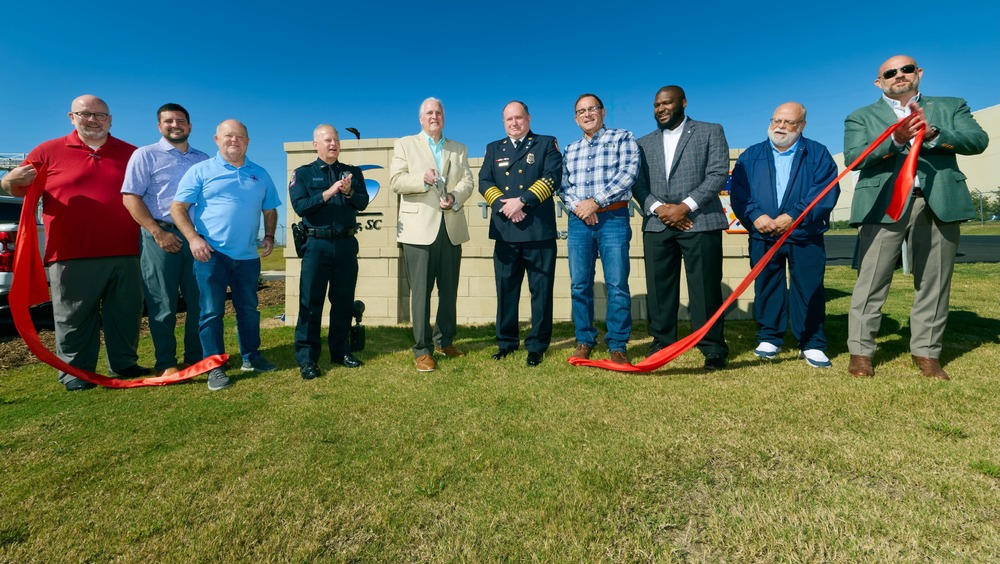
The City of Greer celebrated a big milestone and its commitment to public safety this week.
On Tuesday, September 29, City Council, police and fire chiefs, and the city administrator cut the ribbon to officially open Greer's new $16 million Public Safety Training Center on Hood Road.
"We have now moved to the point that we have got something that is worthy of this community and the growth that we have seen in the last 25 or 30 years," said Greer Mayor Rick Danner. "We are excited as we start this journey now with this new building and the opportunities that it is going to afford us."
Police Chief Matt Hamby started his policing career as a patrol officer in Greer in 1993. Hamby rose through the ranks to become chief in 2017. At the grand opening for the training center, Hamby was touched by the large crowd of people who showed up to celebrate the milestone.
"It means a lot to us as we've worked through the dreams, and then eventually planning, and then construction of this amazing facility," said Chief Hamby. "It's really fulfilling for me personally to finally be here today to enjoy this moment, and I'm glad all of you are here to enjoy this moment with us."
Watch Our Video to See Inside
Four Projects ForGreer
The training center is the first of the ForGreer capital projects to open, and it's a big step forward in supporting police, fire, and emergency medical teams in the city and beyond. The fire training tower, indoor firing range, and seminar space will allow first responders to train here in Greer instead of traveling to other parts of the state to sharpen their skills.
Training Is Key in Fire Service
Fire Chief Dorian Flowers took command of the Greer Fire Department in May of 2015 after serving in Hendersonville, North Carolina. Chief Flowers says his department logged more than 25,000 hours of training this past year.
"In our line of work, training is what brings us home to our families," Chief Flowers said. "Training is what brings you home to your families and saves you whenever we have to do our jobs."
Facility Features
The large classroom space inside the Public Safety Training Center can seat about 100 people, but it can also be divided into two smaller spaces. The facility also has multiple breakout rooms and conference rooms as well as a lobby space big enough to host events.
Chief Hamby says the facility's 50-yard, indoor shooting range is unmatched anywhere in South Carolina. The targeting feature allows trainers to customize shooting routines and run what he calls a "dual running man target." Hamby says the training center will help his department meet its obligation to provide first-class law enforcement services to our community.
"We've created an incredible training environment not only for academics but also tactical opportunities here," Police Chief Hamby said. "We are very fortunate to have this new, world-class training facility right here in Greer."
New Life for an Old Site
The new training center sits on a site that used to house a fire station and training tower. The biggest issue with the old facility was space. "One of the biggest issues we had was being able to get apparatus around the building that we would be able to do in a real-world event," said Chief Flowers. The new fire tower allows first responders to train on all sides of the structure.
Regional Asset
Flowers says his department trains monthly, and sometimes weekly, with partner agencies. The chief says they will all benefit from Greer's investment.
"It's a regional asset because we bring those other departments in that we respond automatic aid with, and we actually train together just like we're working on the scene of an incident," said Chief Flowers. "That's one of the biggest benefits to that." Flowers says they'll be hosting classes and training that will attract departments from all over.
Mayor Danner says the future of law enforcement is a multidisciplinary, collaborative process that uses the latest technology and data to inform how officers prepare.
"Every dollar spent on training returns measurable value," said Mayor Danner. "The question isn't whether we can afford such a building exclusively for training but whether we can afford the consequences of inadequate training or preparation."